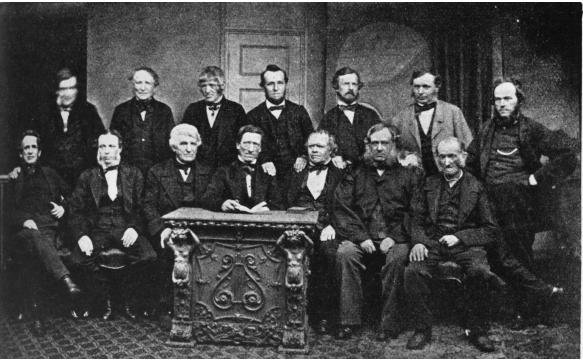
In the middle of the 19th century, the textile workers in Rochdale lived in miserable conditions. Their low wages, combined with high inflation and the sale of bad quality products, adulterated by unscrupulous traders, was suffocating them. This era, known as the “Decade of Famine”, pushed workers to seek out solutions for themselves. They did not expect charity; they opted for self-help and group organisation in order to meet their basic needs.
After several failed attempts at cooperation, in 1844 a group of 28 crafts people (27 men and one woman) managed to accumulate one pound sterling each. With this modest capital of 28 pounds sterling, they rented premises in Toad Lane and founded the Rochdale Equitable Pioneers Society. Their aim was simple, but revolutionary: to open a food shop managed by themselves to guarantee both the quality and a fair price.
The creation of the unchangeable principles
Rochdale’s real legacy was not just the shop, but the set of rules that they created to ensure the success and durability of their company: the Rochdale Principles. These statutes differentiated the Rochdale Company from all the previous cooperative experiments. By formalising these principles, the Pioneers built a business model that gave priority to the people over the capital. This systemic focus is the key to understanding cooperative success.
The most distinctive principle was the Members’ Democratic Control (one member, one vote), guaranteeing that instead of the decision-making power depending on the money contributed, it relied on the membership. Added to this was the Open, Voluntary Membership (without discrimination) and the Economic Participation of the Members, which limited the interest over the capital and established the dividing up of surplus (profits) to the members in proportion to their transactions or purchases, not to their investment. These are the foundations of social justice.
Other essential principles included cash sales (to prevent debts) and the commitment with education, training and information. The Pioneers understood that a sustainable cooperative needs well-informed, qualified members to manage it. They also promoted cooperation between cooperatives and the commitment to the community. This comprehensive view, which encompasses the economic, social and educational areas, is what has allowed the cooperative model to last.
From Rochdale to the International Cooperative Alliance
The success of the Rochdale Company quickly spread. Its model was first copied in Great Britain and then around the entire world, evolving into agricultural, credit (such as the Raiffeisen model), housing and associated work cooperatives. Today, the Rochdale Principles, up-dated by the International Cooperative Alliance (ICA) in 1995, continue to be the legal and ethical foundation for thousands of cooperatives. This movement shows that another model of social company is possible.
Currently, the cooperatives around the world continue to show their resilience, creating sustainable employment and promoting local development. The story of the 28 Pioneers reminds us that, even with limited resources, group organisation and democratic values can generate a transforming economic and social impact on a global scale. The cooperative model continues to be a state-of-the-art solution for the 21st century’s economic challenges.